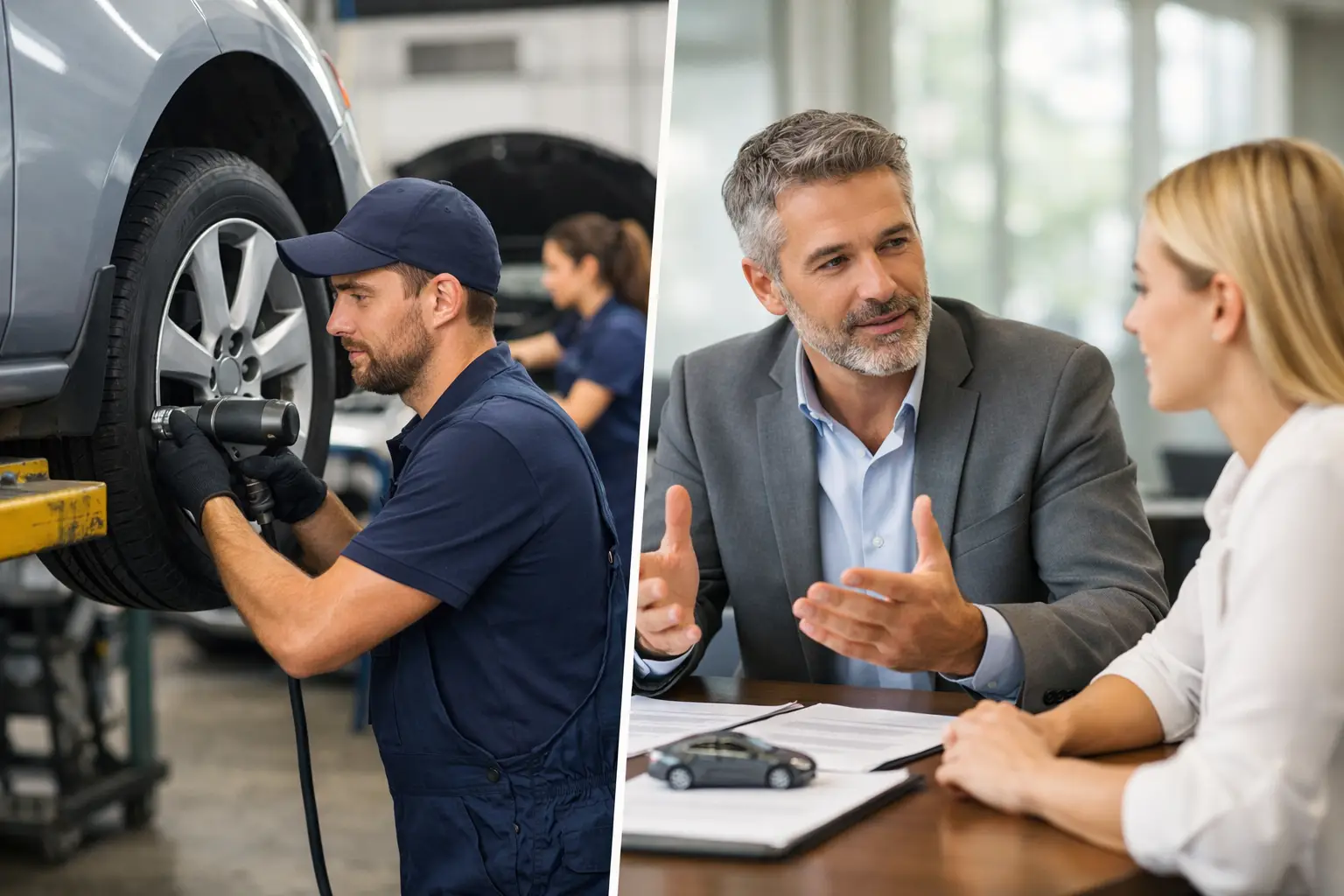
A customer drops off a late-model truck for brake work. Overnight, a fire in the service area damages the truck along with several others awaiting repair. The shop may have commercial general liability coverage, but that does not automatically mean the customer vehicles are insured. Understanding garagekeepers versus general liability coverage is essential for any business that repairs, services, stores, parks, transports, or otherwise takes possession of customer vehicles.
For auto repair facilities, body shops, dealerships with service departments, valet operations, towing companies, and fleet service providers, the distinction can determine whether a major vehicle loss is a manageable claim or a direct operating expense.
Garagekeepers Versus General Liability Coverage: The Core Difference
Commercial general liability, often called CGL, is designed to address third-party bodily injury, property damage, and certain personal and advertising injury claims arising from business operations. It is foundational coverage for many Texas businesses. If a visitor slips in a repair shop lobby or a technician accidentally damages a customer's fence while making a service call, general liability may respond, subject to policy terms, limits, and exclusions.
Garagekeepers coverage addresses a more specific exposure: physical damage to customer vehicles while they are in the business's care, custody, or control. That phrase matters. Standard general liability policies commonly exclude property damage to property in an insured's care, custody, or control. A customer vehicle in a repair bay, storage lot, paint booth, or service queue will often fall squarely within that exclusion.
Put simply, general liability protects against many liabilities created by operations. Garagekeepers protection is intended to address damage to customers' autos while the business has possession of them.
Why General Liability Alone Can Leave a Vehicle Gap
A CGL policy is not a substitute for garagekeepers coverage simply because it includes property damage liability. The policy's property damage coverage is built for damage to someone else's property caused by the business, not for property entrusted to the business.
Consider a few common scenarios. A service advisor drives a customer's SUV into a lift, causing substantial body damage. A hailstorm damages vehicles parked on a repair facility's lot overnight. A fire spreads through a body shop and damages customer vehicles awaiting parts. In each case, the vehicles are under the shop's control. The care, custody, or control exclusion may prevent a general liability policy from responding.
That does not mean every vehicle-related claim requires garagekeepers coverage. If a technician's test drive causes an accident that injures another motorist or damages another vehicle, the primary insurance question may involve garage operations liability or commercial auto coverage. Coverage depends on who was driving, why the vehicle was being operated, policy language, state requirements, and the vehicles involved.
The operational lesson is straightforward: businesses should not assume one liability policy covers every loss connected to a vehicle.
What Garagekeepers Coverage Can Address
Garagekeepers coverage is commonly written for physical loss or damage to customers' autos left with an insured for service, repair, parking, storage, or similar operations. Depending on the form selected, it can respond to losses such as collision, fire, theft, vandalism, wind, hail, and other covered causes of loss.
Coverage is often available on two broad bases: legal liability and direct primary.
Legal liability garagekeepers
Legal liability coverage generally responds when the business is legally liable for the customer's vehicle damage. For example, it may apply when poor security, employee negligence, or an operational failure contributed to a theft or loss.
This approach can be appropriate for some operations, but it may not respond if the business was not legally responsible for the event. A severe hailstorm is a useful example. If the business took reasonable precautions and was not negligent, a legal liability form may not provide the result the owner expects.
Direct primary garagekeepers
Direct primary coverage can provide broader protection by responding to covered physical damage to customer vehicles in the business's custody, whether or not the business is legally liable. This form is often a stronger fit for operations that hold higher-value vehicles, maintain overnight storage, or need a more predictable claims structure following weather, fire, or theft losses.
The trade-off is cost and underwriting scrutiny. Carriers will evaluate security controls, fencing, lighting, key management, indoor versus outdoor storage, employee procedures, loss history, and the value and volume of vehicles on site.
General Liability Still Has a Central Role
The fact that garagekeepers fills a vehicle custody gap does not reduce the value of general liability. A well-structured insurance program usually needs both.
General liability can address premises and operations exposures that garagekeepers does not. A customer could be injured after tripping over an air hose in the service area. A vendor could be hurt while delivering parts. Overspray from a paint operation could damage a neighboring business's building. These are operational liability exposures, not necessarily garagekeepers claims.
For businesses with garage operations, the liability form may also be tailored through garage liability coverage rather than a standalone CGL policy. Garage liability is designed for auto-related businesses and can combine premises and operations liability with auto liability features. However, it still should not be assumed to include physical damage protection for customer vehicles. Garagekeepers is frequently added separately or structured alongside the garage policy.
The policy names matter less than the actual forms, endorsements, exclusions, and limits. A coverage review should confirm how the program responds to the business's specific workflow.
Coverage Needs by Business Type
A mechanical repair shop may need garagekeepers limits based on the maximum number and value of customer vehicles kept overnight, not average daily volume. A shop that regularly services luxury, commercial, or specialty vehicles can be underinsured even with what appears to be a substantial aggregate limit.
Body shops often face heightened exposure because vehicles may remain on premises for extended periods and may be partially disassembled. Paint, welding, battery charging, parts storage, and multiple vehicle locations add property and fire considerations that affect both underwriting and loss control.
Dealerships need to separate customer vehicles from owned inventory. Dealer open lot coverage is generally intended for vehicles owned by the dealership, while garagekeepers may address customer vehicles left for service or repair. Mixing those exposures can create costly assumptions at claim time.
Tow operators require particular attention. A vehicle hooked to a tow truck, carried on a flatbed, or transported between locations may require on-hook towing coverage or another specialized commercial auto endorsement. Garagekeepers may become relevant after the vehicle reaches the storage yard or repair location, but it is not automatically a replacement for transit-related protection.
Valet and parking operations have their own issues, including frequent vehicle movement, keys in employee custody, and concentrated losses during weather events. Their limits and deductibles should reflect the maximum accumulation of vehicles at a single location.
Limits, Deductibles, and Details That Change the Outcome
Selecting garagekeepers coverage is not only about deciding whether to buy it. The structure matters. A limit that reflects the usual number of cars on site may fail during a busy holiday period, after a weather event, or when delayed parts keep vehicles longer than expected.
A practical review should examine the maximum value of all customer vehicles that could be at one location at the same time. It should also assess whether sublimits apply by location, by occurrence, or by vehicle. Businesses should understand the deductible for collision and comprehensive-type losses, whether coverage applies to vehicles stored outdoors, and whether customer contents inside the vehicle are included or limited.
Employee use is another area requiring clarity. Employees may move a vehicle within the lot, road-test it, or take it off premises for a related purpose. Those actions can trigger different coverage sections. Commercial auto, garage liability, garagekeepers, and hired or non-owned auto provisions can intersect in ways that are not obvious from a certificate of insurance.
Building a Coordinated Insurance Program
The most effective approach is to map coverage to the way vehicles actually move through the operation. Identify when a vehicle enters the premises, where keys are held, whether it is test-driven, whether it is stored overnight, whether it is transported, and who has access at each stage. That operational map helps expose gaps that policy labels alone may miss.
A tailored program may combine garagekeepers coverage, garage or general liability, commercial auto, commercial property, workers' compensation, cyber coverage, and business interruption protection. The right combination depends on the operation, vehicle values, locations, contracts, and risk tolerance.
For Texas businesses, weather is a material consideration. Hail, wind, flooding, and severe storms can create concentrated losses when dozens of customer vehicles are parked outside. Physical security and documented vehicle intake procedures also matter. Photos at check-in, condition reports, controlled key access, and clear storage practices can support both risk control and claims documentation.
The right question is not whether general liability or garagekeepers coverage is better. It is whether the insurance program reflects the property, vehicles, and responsibilities your business takes on each day. Before the next customer hands over the keys, confirm that the coverage follows the vehicle through every stage of your operation.