You're staring at a cyber insurance application that looks more complicated than your tax return. Questions about encryption protocols, incident response plans, and data retention policies — it's enough to make you close the tab and hope for the best.
Bad move. With data breaches costing an average of $4.88 million in 2024, hoping isn't a strategy. This guide breaks down exactly what you need to complete your cyber liability application without pulling your hair out.
What Is a Cyber Liability Insurance Application?
Think of your cyber insurance application as a background check — for your digital life. It's the detailed form that tells insurers whether you're protecting customer data like Fort Knox or leaving the vault door wide open.
Here's the deal: insurers want to know three things. What data you're handling, how you're protecting it, and whether you've already screwed up. The better your answers, the faster you get approved and the less you'll pay.
Most applications take 2-4 weeks if you've got your security ducks in a row. Need to beef up your defenses first? You're looking at 2-3 months before anyone issues you a policy.
First-Party vs. Third-Party Coverage
Your application splits coverage into two camps:
First-party coverage is your direct damage control. Think data recovery after ransomware hits, lost revenue when your systems go down, and the forensic experts you hire to figure out what happened.
Third-party coverage handles the lawsuits. When customers sue because their credit card numbers leaked, this picks up the tab.
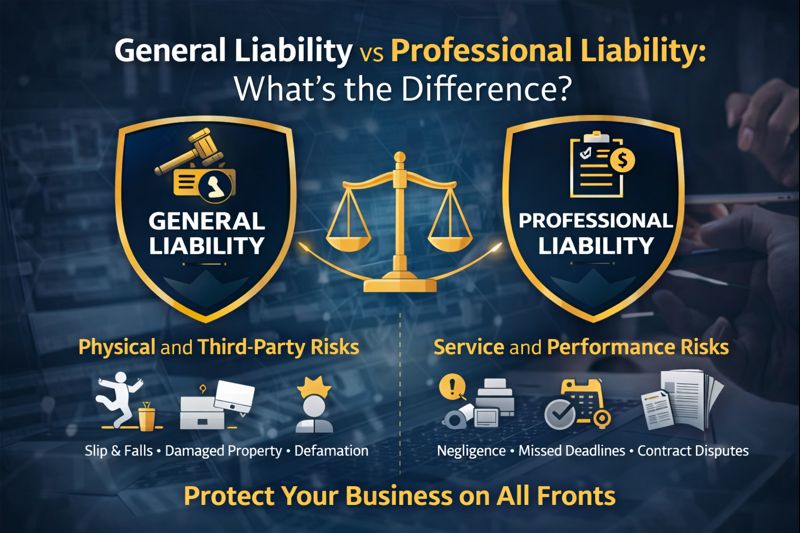
You need both. Most smart businesses bundle cyber coverage with professional liability insurance to cover all the angles.
The Basic Info Section (The Easy Part)
Every application starts with standard business details. This section's straightforward — just have your facts ready.
You'll need your full legal business name (not just your DBA), physical address for all locations, annual revenue with projections, and your exact employee count including remote workers. Toss in your industry classification and primary business activities.
Got subsidiaries? Applications from major carriers want to know about every affiliated company, what they do, and what percentage you own.
The Data Questions (Where It Gets Real)
This section separates businesses that take security seriously from those winging it. Insurers want to know how many unique personally identifiable records you maintain, including those stored by third-party providers.
Translation: they're counting every customer name, email, credit card number, and social security digit floating around your systems.
What Data Are You Sitting On?
Your application digs into specifics:
| Data Type | What They're Really Asking | | --- | --- | | Customer data | Names, addresses, payment info — the usual suspects | | Health records | Are you HIPAA-regulated? Better know the answer | | Financial data | Processing credit cards? You're in the hot seat | | Biometric data | Fingerprints, facial scans — the sci-fi stuff |
Don't guess these numbers. Run an actual audit. Include data your marketing automation platform stores, what your payment processor keeps, and everything sitting in your CRM.
The average breach now costs $4.88 million. Underestimate your data volume and you're underinsured when things go south.
Security Controls That Actually Matter
Here's where applications get teeth. Modern insurers don't just ask about your security — they require specific controls or they won't write your policy. Period.
Multi-Factor Authentication (Non-Negotiable)
MFA is your golden ticket. Without it, you're basically applying with a neon sign that says "easy target."
Coalition's 2024 Cyber Threat Index found that 82% of cyber insurance claims involved organizations lacking multi-factor authentication. Let that sink in — 82% of claims could've been prevented with one security control.
Your application asks if you've enabled MFA for:
- Remote network access (VPNs, cloud systems)
- Email accounts (especially C-suite and finance)
- Cloud services and SaaS apps
- Admin-level system access
No MFA? Expect denials or premiums that'll make you wince.
Endpoint Detection and Response
That antivirus software from 2015? It doesn't cut it anymore. Insurers want EDR — software that actively hunts for threats instead of just blocking known viruses.
Applications ask about what endpoint tools you're running, how often you patch systems, whether you're monitoring for weird behavior, and if you scan for vulnerabilities regularly.
Backup and Recovery (Your Ransomware Insurance)
Every application hammers you with backup questions. Insurers need proof you can recover from a ransomware attack without paying criminals.
The checklist:
- Encrypted backups stored offline or air-gapped
- Regular testing (not just backing up and hoping)
- Documented recovery time objectives
- Geographic separation between live systems and backups
Here's the kicker — backing up isn't enough. You need to prove you've actually restored from those backups. Schedule quarterly recovery drills and document them.
Your Incident Response Plan
Got a written plan for when (not if) you get hit? Insurers evaluate whether you have designated individuals to handle cybersecurity and whether you've set up effective frameworks for regulatory compliance.
Your plan needs four key elements:
- Named response team members with contact info
- Step-by-step containment procedures
- Communication protocols for customers and regulators
- Vendor contacts for forensic investigation
No plan? You're dead in the water. Insurers see you as a claim waiting to happen.
The Claims History Section (Be Honest or Get Burned)
This part trips up more businesses than anything else. You need to disclose every cyber incident from the past 3-5 years — even the "small" ones you fixed internally.
Report any data breaches, ransomware infections, privacy complaints or regulatory probes, network outages over 4 hours, and legal claims related to data security.
Hiding incidents is worse than having them. Insurers run background checks. They'll find that breach you swept under the rug, and then they'll deny your claim when you need it most.
For each incident, attach a supplemental form explaining what happened and how you fixed it. Show them you learn from mistakes.
Coverage Limits and Retention (The Money Talk)
Your application asks how much coverage you want. This isn't a number you pull from thin air.
Determining Your Coverage Amount
Small businesses typically need $1 million to $2 million in coverage, while enterprises handling sensitive data require $10 million to $50 million or more.
Quick formula: multiply annual revenue by 2-5%. A $10 million company should be looking at $200,000 to $500,000 minimum.
Also factor in:
- Customer records × $5-15 per record (notification costs add up fast)
- Maximum regulatory penalties (HIPAA violations hit $1.5 million annually)
- Your largest client contract requirements (often 2-3x higher than minimums)
Retention Amounts (Your Deductible)
Retention is what you pay before insurance kicks in. Higher retention = lower premiums but more pain when you file a claim.
Most businesses land in the $5,000 to $25,000 range. Your business owner's insurance might coordinate to help cover the deductible, so ask about that.
Common Application Mistakes That Kill Your Approval
Even seasoned business owners blow these. Here's what tanks applications.
Incomplete Security Documentation
Insurers don't take your word for it. Claim you've got an MFA? Show configuration screenshots. Say you do backups? Prove you test them.
Build a documentation folder with network diagrams, security policies, employee training records, vendor agreements, and recent penetration test results. Have it ready before you start the application.
Guessing Your Data Volume
"I don't know, maybe 50,000 customer records?" isn't going to fly. Run an actual audit across all systems — your CRM, email marketing platform, payment processor, customer service tools, and third-party vendors.
Ignoring Your Vendors
Your security is only as strong as your weakest vendor. You'll need to disclose vendor names and their access to your data.
List every vendor touching your systems. Include their security certifications. If they cause your breach and you can't prove proper vendor management, your claim gets denied.
Get Help Before You Apply
A strong application gets you better coverage at a better price. At BuyBizIns, we help businesses prepare, compare carriers, and secure cyber coverage that actually responds when it matters.