Starting your own business is exciting, but it also comes with risks. That's where business insurance steps in – to protect everything you've worked hard to build.
What Is Business Insurance?
Business insurance protects your company from financial losses when unexpected events happen. Think of it like a safety net that catches you when things go wrong.
Why You Need Business Insurance
As a new business owner, you might wonder if business insurance is really necessary. Here's why it matters:
- Protection from lawsuits: If someone gets hurt at your business or claims your services caused them harm, insurance helps cover legal costs.
- Property protection: Insurance helps repair or replace your equipment, inventory, and building if they're damaged by fire, theft, or natural disasters.
- Business continuity: If disaster strikes and you can't operate, some insurance policies help cover your lost income while you get back on your feet.
- Credibility with customers: Having proper insurance shows customers you're professional and prepared for anything.
- Legal requirements: Depending on your location and industry, some insurance types may be required by law.
Essential Insurance Types for New Businesses
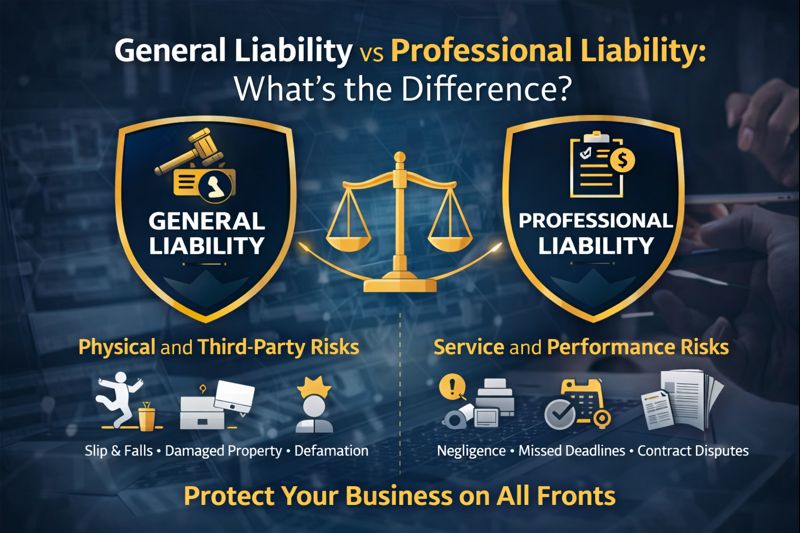
1. General Liability Insurance
What it covers: Accidents, injuries, and claims of damage that happen because of your business operations.
Example: A customer slips and falls in your store, breaks their arm, and sues you for medical bills.
Who needs it: Nearly every business should have this basic protection.
2. Professional Liability Insurance (E&O)
What it covers: Claims that your professional advice or services caused a client to lose money.
Example: You're a consultant who gives advice that accidentally causes financial harm to a client, and they sue you.
Who needs it: Service providers like consultants, accountants, IT professionals, and anyone giving expert advice.
3. Business Property Insurance
What it covers: Your building, equipment, inventory, furniture, and fixtures if they're damaged or destroyed.
Example: A fire damages your office space and destroys your computers and furniture.
Who needs it: Any business with physical assets, whether you own or rent your space.
4. Business Owner's Policy (BOP)
What it covers: Combines general liability and property insurance in one package, often at a lower cost than buying them separately.
Example: Your shop experiences water damage from a broken pipe, ruining inventory, AND a customer slips on the wet floor and gets injured.
Who needs it: Small to medium-sized businesses looking for comprehensive coverage.
5. Workers' Compensation
What it covers: Medical expenses and lost wages for employees who get hurt or sick because of their job.
Example: Your employee falls off a ladder while stocking shelves and needs medical treatment.
Who needs it: Most businesses with employees are legally required to have this coverage.
6. Commercial Auto Insurance
What it covers: Vehicles used for business purposes in case of accidents or damage.
Example: Your delivery driver gets into an accident while making deliveries.
Who needs it: Any business that owns vehicles or has employees who drive for work purposes.
How to Choose the Right Coverage
- Assess your risks: Think about what could go wrong in your specific business.
- Consider your industry: Some industries face unique risks that require specialized coverage.
- Look at your assets: The more valuable equipment or property you have, the more coverage you'll need.
- Check legal requirements: Research what insurance is legally required for your business type and location.
- Talk to an expert: An insurance agent who specializes in business coverage can help identify your needs.
Tips for Saving Money on Business Insurance
- Bundle policies: Many insurers offer discounts when you buy multiple policies.
- Raise deductibles: Choosing a higher deductible (what you pay before insurance kicks in) can lower your premiums.
- Implement safety measures: Security systems, fire alarms, and employee training can reduce risks and may qualify you for discounts.
- Shop around: Get quotes from multiple insurance providers to find the best rates.
- Review annually: As your business grows, your insurance needs will change. Review your coverage yearly to make sure you're not over or under-insured.
Common Insurance Mistakes to Avoid
- Underestimating coverage needs: Don't cut corners on coverage limits to save money.
- Overlooking industry-specific risks: General policies might not cover risks unique to your business.
- Waiting too long to get insured: Don't wait until something happens to get coverage.
- Not understanding your policy: Take time to read and understand what is and isn't covered.
Real-World Example
Alex started a small photography business. At first, he thought he only needed insurance for his expensive camera equipment. But after talking with an insurance professional, he realized he also needed:
- General liability insurance in case a client tripped over his equipment during a photoshoot
- Professional liability insurance if a client was unhappy with his work
- Business property insurance for his home office equipment
This comprehensive coverage ended up saving Alex when his studio flooded, damaging $15,000 worth of equipment. His insurance covered the replacement costs, allowing him to continue working without a major financial setback.
Getting Started
First, make a list of your business assets, activities, and potential risks. Then reach out to a trusted insurance provider who can walk you through your options.
Remember, insurance isn't just an expense — it's an investment in your business's future. The right coverage gives you peace of mind so you can focus on what really matters: growing your business.
Business Insurance Network provides access to over 40 top-rated insurance carriers to secure the best coverage for your business. With 21+ years of experience and over 6,000 policy holders served, we understand the unique needs of first-time entrepreneurs. Contact us today for a free consultation about protecting your new business.